

Hotel dining chairs work harder than their showroom appearance suggests. They are pulled out, wiped down, bumped into tables, and occupied through meals of very different lengths. A sound specification has to cover posture, upholstery, frame shape, repair access, and freight. Miss one of those points and an elegant chair may soon become a service problem. The checks below help you compare commercial dining chairs and give a factory a brief that can be tested before bulk production.
Key takeaways: map the operating pattern; check loaded seat height at the real table; clean the actual cover sample with site chemicals; examine joints and glides; and review the carton plan before freight is booked.
Start With the Hotel Operating Pattern
Not every hotel food area treats a chair the same way. Breakfast rooms have rapid turnover and frequent spills. Guests remain seated much longer in a fine dining room, so the pressure points in the seat and back become obvious. Banquet crews care about fast handling, storage, and easy replacement. Write down seat count, opening hours, floor finish, cleaning practice, and storage space before choosing a silhouette. That short record often rules out an attractive chair that would be awkward in daily service.
Seat Geometry Controls Real Comfort
Begin with the table, not a catalogue page. A finished seat height around 450 to 480 mm often works with a standard dining table, but a deep apron or thick cushion may take away the expected knee room. Measure to the cushion after someone has sat on it. If the seat is low, guests tend to pitch forward; if it is high, the front edge may press behind the knees. PNA Furniture model PADC001A, at 520 mm wide and 600 mm deep, is a practical spacing reference when marking chair positions around a sample table.
Match Back Support to Dwell Time
Back angle is easy to overlook during a quick sample review. A slight recline can feel welcome over a long dinner, while too much recline makes the chair difficult to pull close to the table. Ask for the actual angle, lumbar shape, and proposed foam rather than accepting the label comfortable. Then sit at the specified table and get in and out from both sides. Move the chair across every floor transition used on site; rear legs sometimes catch where a static showroom test reveals nothing.
Choose Upholstery for Cleaning, Not Just Color
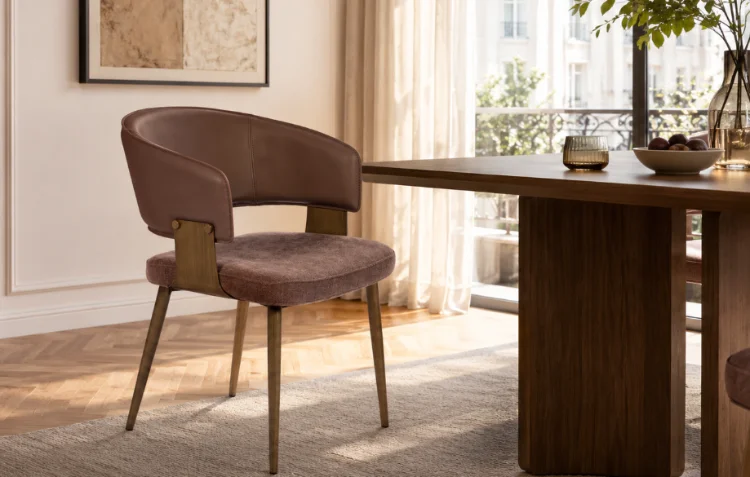
The cover sets the mood, but the cleaning routine usually decides how long it keeps that look. Fabric feels warm and gives a designer more colour and texture choices. PVC and real leather wipe clean readily after many food spills, though scratches and heat marks can be more noticeable on dark surfaces. Give the supplier the detergent, disinfectant, and stain remover used by housekeeping. Clean paired samples repeatedly. That small trial tells you far more than an abrasion number with no test method attached.
Inspect Seams and Foam Recovery
Use your hands as well as your eyes. Follow each seam around the corners and feel for loose thread, hard piping, or a ridge that could snag another chair. Sit for ten minutes, stand, and repeat twice; the cushion should recover without leaving a hollow or exposing a hard frame edge. On leather panels, look at how the grain sits over curves. On patterned fabric, check the join between seat and back. These are ordinary checks, but they quickly show whether the production sample matches the approved one.
Plan for Humidity and Cleaning Storage
Moisture can create a problem before the chair reaches the dining room. Packaging may hold humidity around timber parts, covers, or foam during a long shipment. At receiving, keep cartons off the floor and open one carton from more than one pallet position. Let the chairs settle in the conditioned space before use. A chair that feels damp should not go straight into a sealed plastic cover. Record odour, surface marks, and moisture concerns at once, while the delivery condition can still be verified.
Verify Frame Stability and Floor Contact
A heavy-looking frame is not automatically a stable one. Put the sample on a known flat surface and confirm that every leg makes contact. A rocking chair may have uneven glides, a warped member, or several small joint variations adding up in the same direction. Your specification should name the frame material, joining method, finish, and replacement glide. Match that glide to the floor: a hard one may mark stone, while a soft one can drag on carpet and work the joints loose.
Use a Simple Incoming Inspection
Do not inspect only the easiest carton at the top of a pallet. Pull samples from different positions, then compare seat height, overall width, and table clearance with the signed drawing. Look beneath the chair too. Fasteners, weld areas, corner protectors, crushed cartons, and loose hardware are often more revealing than the front view. Photograph any difference before installation. Agreeing dimensional and cosmetic limits in writing makes a later repair or replacement discussion much less subjective.
Account for Commercial Logistics
Freight belongs in the chair decision because carton volume affects both landed cost and storage. PNA product sheets list packing quantities and cubic metre references by model, so a one chair carton can be compared with a design packed two per carton. Confirm whether the legs arrive fitted, whether cartons may be stacked, and where spare glides or hardware will be placed. For a suitable standard programme made on the Vietnam line, also confirm the batch plan and shipment documents before releasing the purchase order.
Where PNA Furniture Fits a Hospitality Program
The PNA Furniture dining chair range is a sensible place to shortlist shapes when a project mixes upholstery with metal, wood, or panel work. PNA Furniture develops original designs and supplies custom furniture for hotels, restaurants, homes, and other commercial interiors. Send the table drawing, loaded seat height, cover sample, cleaning products, carton limits, and order quantity with the enquiry. The resulting sample can then be judged in the actual room setup, not as an isolated catalogue chair.
The PADC035A Antique-Style Saddle Leather Dining Chair offers a saddle influenced profile and a real leather option for a room that needs a distinct accent. That appearance does not replace the practical review. Check its loaded height at the table, clean a material swatch, and confirm how every leg meets the specified floor before approval.
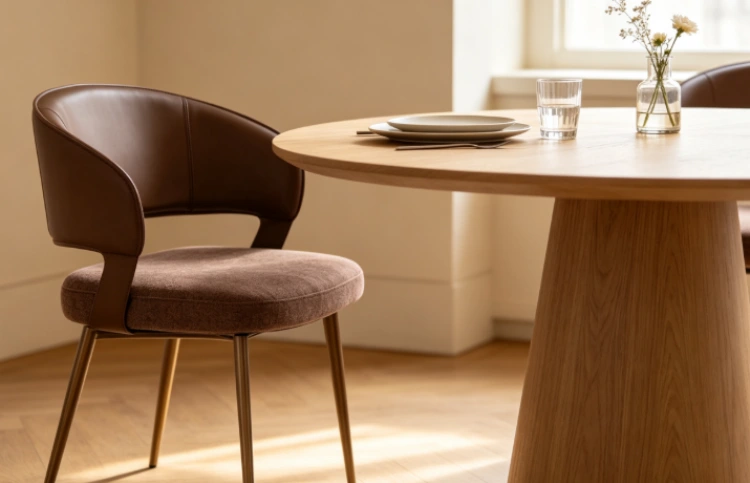
The PNA Furniture case portfolio is useful when you need to see furniture arranged as part of a complete interior rather than one product on a white background. Service planning still needs its own line in the order: state how covers, glides, and hardware will be replaced. Keep one signed off chair after installation as the colour, feel, and repair reference.
FAQ
What seat height works with a standard hotel dining table?
Use 450 to 480 mm only as a starting range. Measure from the finished floor to the cushion under load, then check the guest’s knees against the actual table apron.
Is leather better than fabric for hotel dining chairs?
Neither material wins in every hotel. Leather and PVC are convenient to wipe; fabric gives a wider tactile choice. Test the proposed cover with your own chemicals and judge the surface after repeated cleaning.
How can you stop commercial dining chairs from rocking?
First prove that the test floor is flat. Then compare leg length, joint alignment, and glide contact on chairs taken from several cartons. Put the acceptable movement in the inspection standard before shipment.
What should a factory drawing include for a hotel chair?
Show overall size, loaded seat height, back angle, frame and finish, cover code, seam position, glide, tolerance, carton quantity, and any removable hardware. The drawing should match the table used for sample approval.
How early should you order custom dining chairs for a hotel project?
Work backwards from installation. The schedule needs room for drawings, material approval, a sitting sample, production, inspection, and sea freight. Custom details and destination change the timing, so put each milestone in the purchase order rather than relying on a general lead time.
Make the Specification Measurable
A good hotel chair brief is not long; it is checkable. Include service hours, table size, loaded seat height, the cover cleaning test, frame finish, carton limit, inspection sample, and spare parts. Send the completed brief through the PNA Furniture contact page. It gives the supplier something concrete to quote and gives the hotel team a chair they can clean, move, repair, and sit on comfortably long after opening day.


