

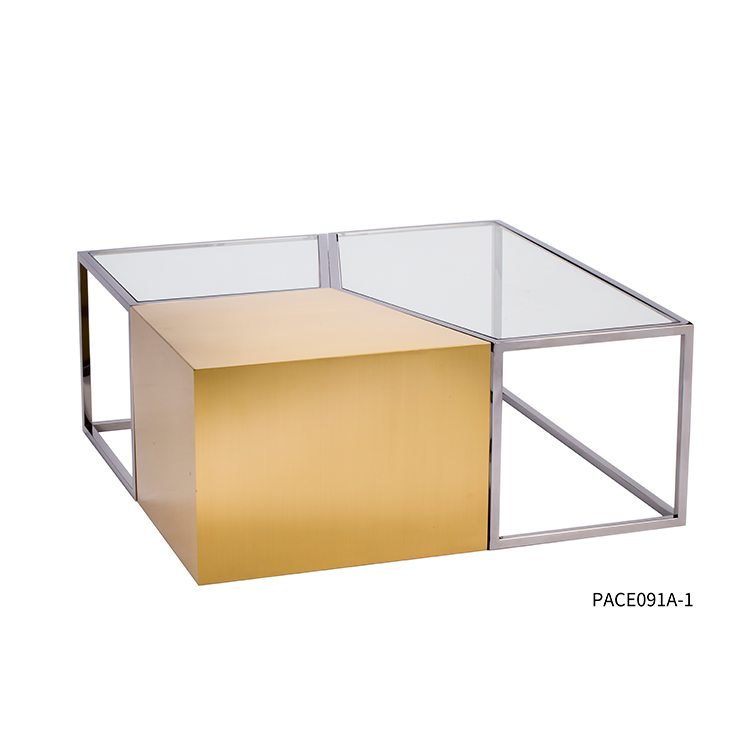
Restaurant dining table stability depends on base span, top weight, floor contact, and how guests lean, slide, and clean around the table every day. A table that looks balanced in a showroom can wobble on tile grout, timber decking, or uneven outdoor paving. Hospitality projects should test the full table assembly with the planned top, base, glides, and chair clearance before final ordering.
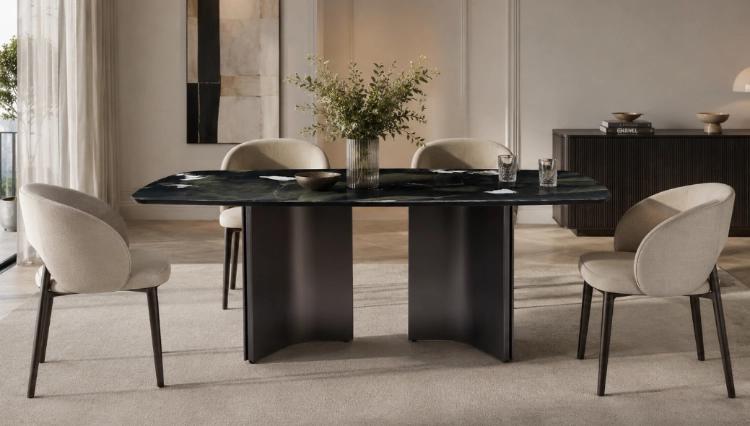
Key Takeaways
- Base span must match top size and guest behavior, not only visual proportion.
- Floor glides and leveling feet are small parts that decide daily wobble complaints.
- Top weight improves planted feel but raises handling, delivery, and floor-load considerations.
- Clearance should be checked with chairs, service movement, and cleaning tools in place.
Wobble Usually Comes from Contact Geometry
A table stands on a small number of contact points. If those points do not share load evenly, any force from a guest’s elbow, a tray, or a moving chair becomes visible as wobble. The problem can come from the floor, the base, the connection plate, the top, or a mismatch between all four.
Hospitality seating decisions often balance comfort and wear life, as seen in commercial dining chairs. Tables need the same project-level thinking because a stable top also affects service confidence, glassware safety, cleaning speed, and the perceived quality of the dining room.
Base Span Must Be Checked With the Real Top
A base that supports a compact laminate top may feel too light under stone-look material or an oversized rectangular surface. Overhang, guest leaning direction, and table grouping all change the leverage on the base. The test should include the specified top thickness and the intended edge profile.
|
Project Condition |
Table Detail to Check |
Operational Risk |
|
Uneven floors |
Adjustable glides and base contact |
Repeated wobble complaints |
|
Large rectangular tops |
Long-axis base span |
Tipping or flex under elbow load |
|
Outdoor dining |
Corrosion resistance and water drainage |
Fast aging around feet and joints |
|
Dense layouts |
Chair pull-out and cleaning clearance |
Service congestion and scuffed edges |
Specifying Tables for the Actual Dining Room
For restaurant, cafe, and hotel dining areas, Commercial Dining Table should be chosen with the final top size, base finish, floor condition, chair model, and cleaning routine in view. PNA Furniture can support project discussions when layout drawings and material preferences are available before production.
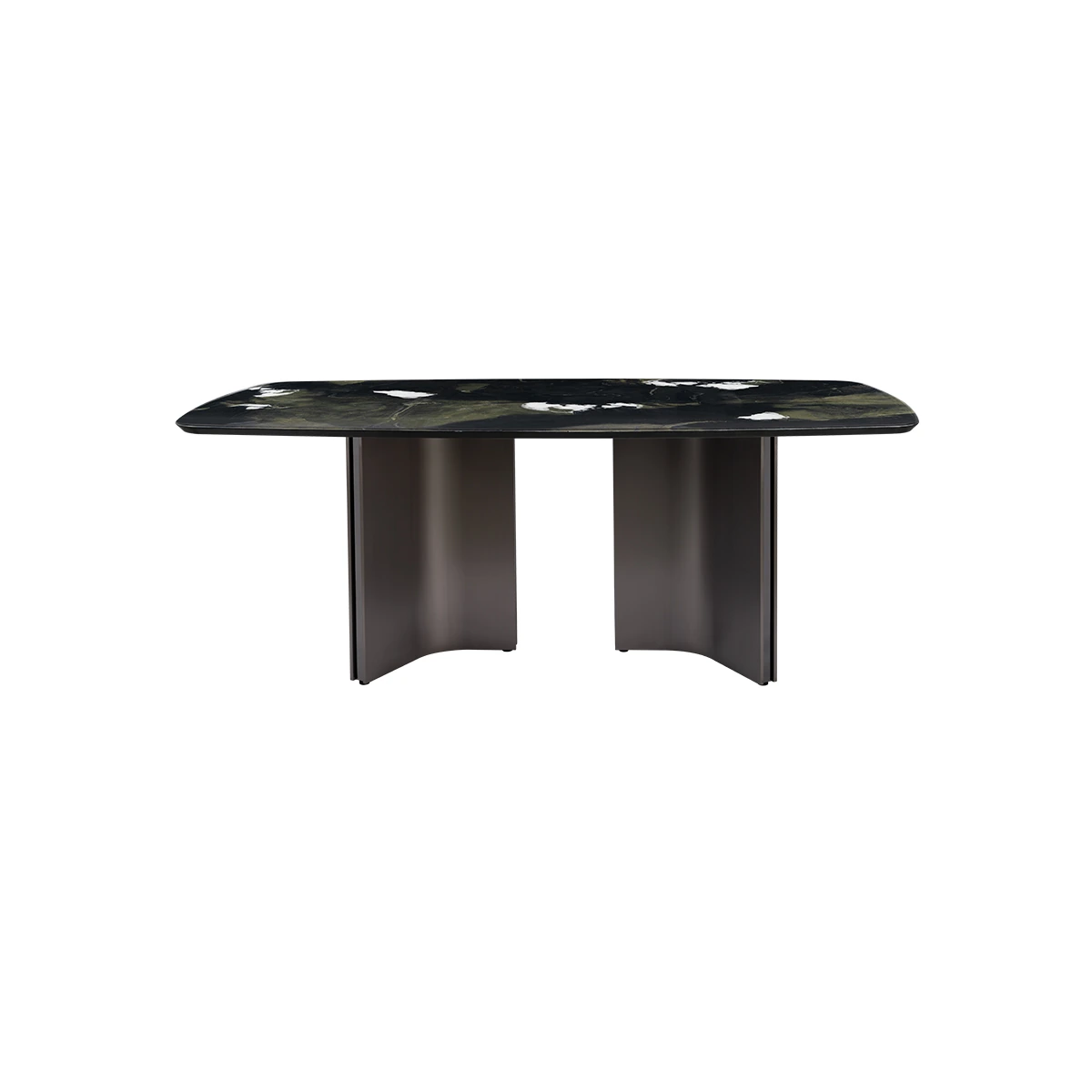
Two site details are easy to underestimate. First, leveling feet must remain accessible after installation; otherwise staff cannot correct wobble quickly. Second, bases with broad plates can trap food residue or cleaning water if the floor is washed frequently.
A visually heavy table is not always the right answer. Banquet rooms, flexible cafes, and seasonal terraces may need moveable furniture, so stability must be balanced against staff handling weight and storage method.
Mock-Up Testing Should Include Chairs, Service, and Cleaning
A table is rarely used alone. Chair pull-out distance, guest knees, server movement, table grouping, and cleaning tools all affect whether the size and base feel right. A mock-up should include the planned chair model, table spacing, and the floor finish specified for the project.
Stability checks should include a side push, elbow load, and gentle diagonal force at the top corner. These simple actions reveal whether the base span and connection plate can control leverage. The test should be run with the real top material because weight and overhang change the result.
Cleaning practice also matters. If staff wet-mop under tables several times a day, feet, glides, and base plates need finishes that tolerate moisture and cleaning chemicals. A base that looks elegant but traps grime around the floor contact can create daily maintenance irritation.
Project Furniture Needs Replaceable Small Parts
Hospitality furniture ages through small parts before the main frame fails. Glides wear down, screws loosen, edging takes impact, and adjustable feet get lost during moves. A project order should identify which small parts can be replaced and how they are packed for future maintenance.
Finish choice should match traffic. A glossy dark table may photograph well but show fingerprints, crumbs, and wiping marks under restaurant lighting. A textured or matte finish may reduce visual maintenance, but it must still clean easily and resist staining from common food and drink contact.
For flexible venues, weight and handling should be specified honestly. Staff who move tables every night will judge the furniture by grip points, base clearance, and stacking or storage behavior as much as by the design render.
Before Final Approval, Preserve the Condition Behind the Result
The release file for Commercial Dining Table should state the material, dimensions, operating condition, inspection method, packing method, and known limitation that matter to restaurant dining table stability. A result without its conditions is difficult to reproduce.
Repeat one representative test after the sample has been handled, stored, or exposed to the intended service condition. That second check separates a stable product from a result that existed only in a clean first demonstration.
A clear boundary is part of professional specification. State where the product performs well, where spot testing is needed, and where another solution should be considered. This protects the project from optimistic assumptions.
The Room Layout Should Be Tested Before the Purchase Order Is Closed
The approval mock-up for Commercial Dining Table should include the actual table spacing, chair pull-out zone, service path, and floor finish. That is the simplest way to test restaurant dining table stability under restaurant behavior rather than showroom behavior.
Staff feedback should be collected during the mock-up. Servers notice blocked aisles, hard-to-clean bases, awkward tray movement, and heavy tables faster than a drawing reviewer. Their comments can prevent daily irritation after the furniture is installed.
Maintenance parts should be part of the order file. Glides, leveling feet, spare screws, touch-up materials, and edge-repair guidance are low-cost items that keep a project looking controlled after opening.
When multiple table sizes are used in one room, check whether the base family remains stable across all tops. A base that works under a small round top may feel wrong under a wider rectangular top, even if the design language is consistent.
Repeat orders should not rely on the first sample alone. Keep a retained reference for Commercial Dining Table, record the accepted condition, and compare later batches against the same measurement or observation method. That habit keeps restaurant dining table stability stable when raw materials, operators, accessories, or logistics conditions change.
If a later order needs a different size, surface, capacity, route, formula, material, or installation condition, treat it as a controlled variation instead of a casual repeat. A short variation note protects the original approval while giving the new requirement enough attention to avoid hidden mismatch.
FAQ
How can restaurant table wobble be reduced?
Use a base span suited to the top size, check the connection plate, choose adjustable feet, and test the table on flooring similar to the project site.
What table base works best for rectangular dining tables?
The base should support the long axis and control overhang. Twin bases or a longer central structure may be needed when the top is large or guests lean along the edge.
Should restaurant tables be heavy?
Weight can improve planted feel, but too much weight complicates delivery, cleaning, and layout changes. The right choice depends on room type and operating routine.
Final Selection Notes
A hospitality table should be specified as a working assembly. The commercial furniture product range can help compare available furniture categories, while the final choice should prove floor contact, top-base match, chair clearance, and maintenance access.


