

A simple looking bar stool may be more than just a seating product for the commercial customer. Not only must it be a suitable match for the interior of the premises, it must also provide adequate comfort for frequent use. In addition, the stool must remain stable under the constant flow of people using it. And, let’s not forget, there are many costs associated with purchasing a product like this, including the initial cost, shipping, and after sales service to name but a few. When it comes to seating in restaurants, hotels, cafés, lounges, kitchen islands and other project spaces, the choice of a bar stool is a critical one. A wrong choice could result in the early demise of the product, customer complaints, complaints and the resultant look of unfinished rooms. And, it must look good on the first day and continue to look good after months of hard use. It must retain its shape, its surface and its function.
Why Does Bar Stool Selection Matter More in Commercial Projects?
Most buyers consider several key attributes when purchasing commercial seating. For example, they may be looking for a good appearance, high levels of comfort and great durability for long-term use. If a single attribute is focused upon to the exclusion of the others then it is likely to cause problems.
Style Must Match the Space, Not Fight It
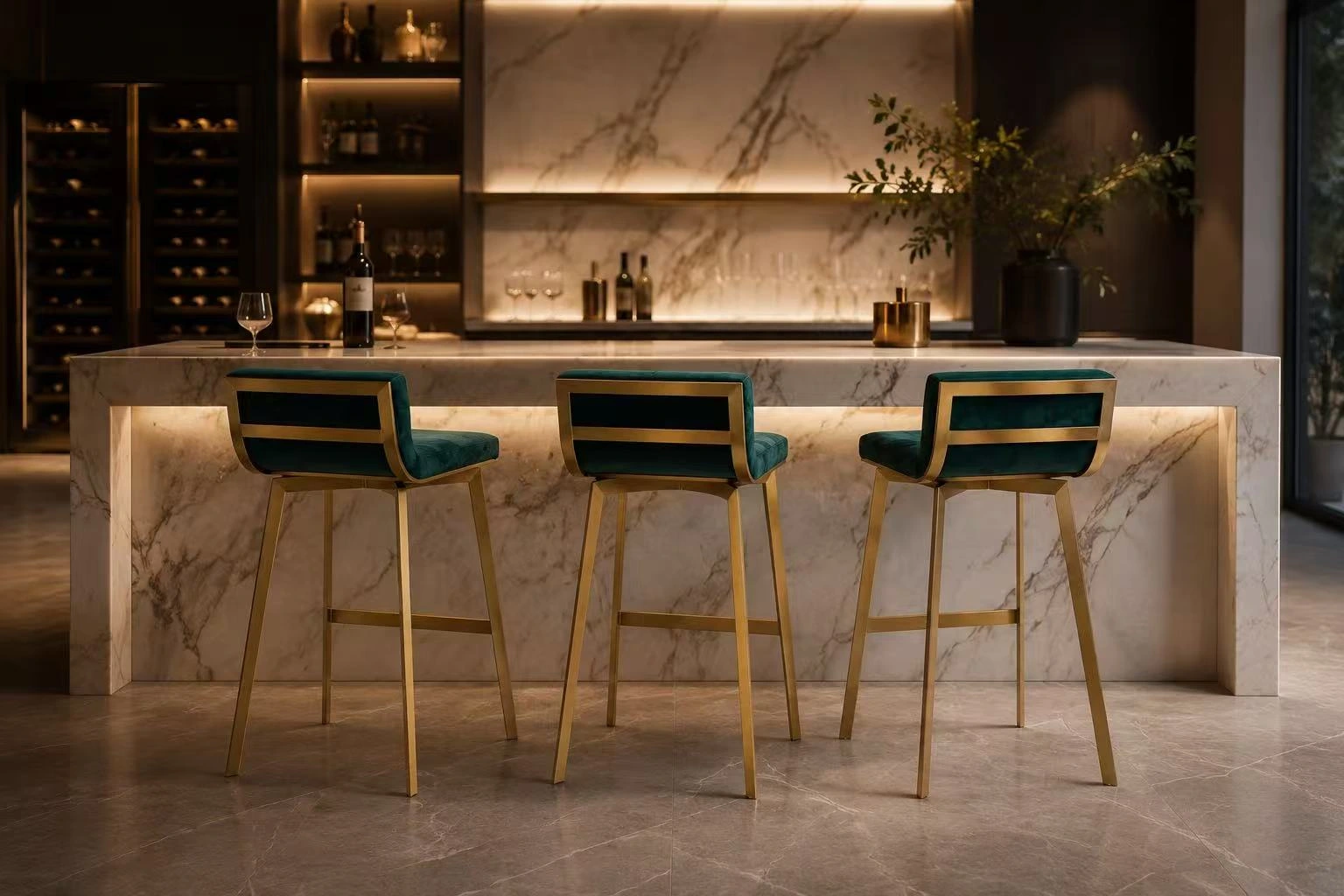
The bar stool should support the room design not be the focal point. Most modern hospitality projects are specified by buyers who prefer a design with clean lines and restricted use of color and details. The use of metal accents, upholstery textures, low back of the stool and the frame all enable a refined detail without being too prominent.
For buyers sourcing from PNA Furniture, this matters because the company focuses on modern and high-end furniture for homes, hotels, villas, restaurants, and commercial projects. Its product range covers upholstery, bar stools, dining chairs, beds, tables, cabinets, shelves, mirrors, and decorative pieces, which makes it easier for project buyers to keep one visual direction across different spaces.
Comfort Cannot Be Judged by Shape Alone
A stool may look comfortable in a catalog but feel different after ten minutes of use. Seat height, backrest angle, footrest position, frame stability, and surface material all affect the sitting experience. Low back bar stools are popular because they give light support while keeping the space open. They also suit compact areas where high backs may look too heavy.
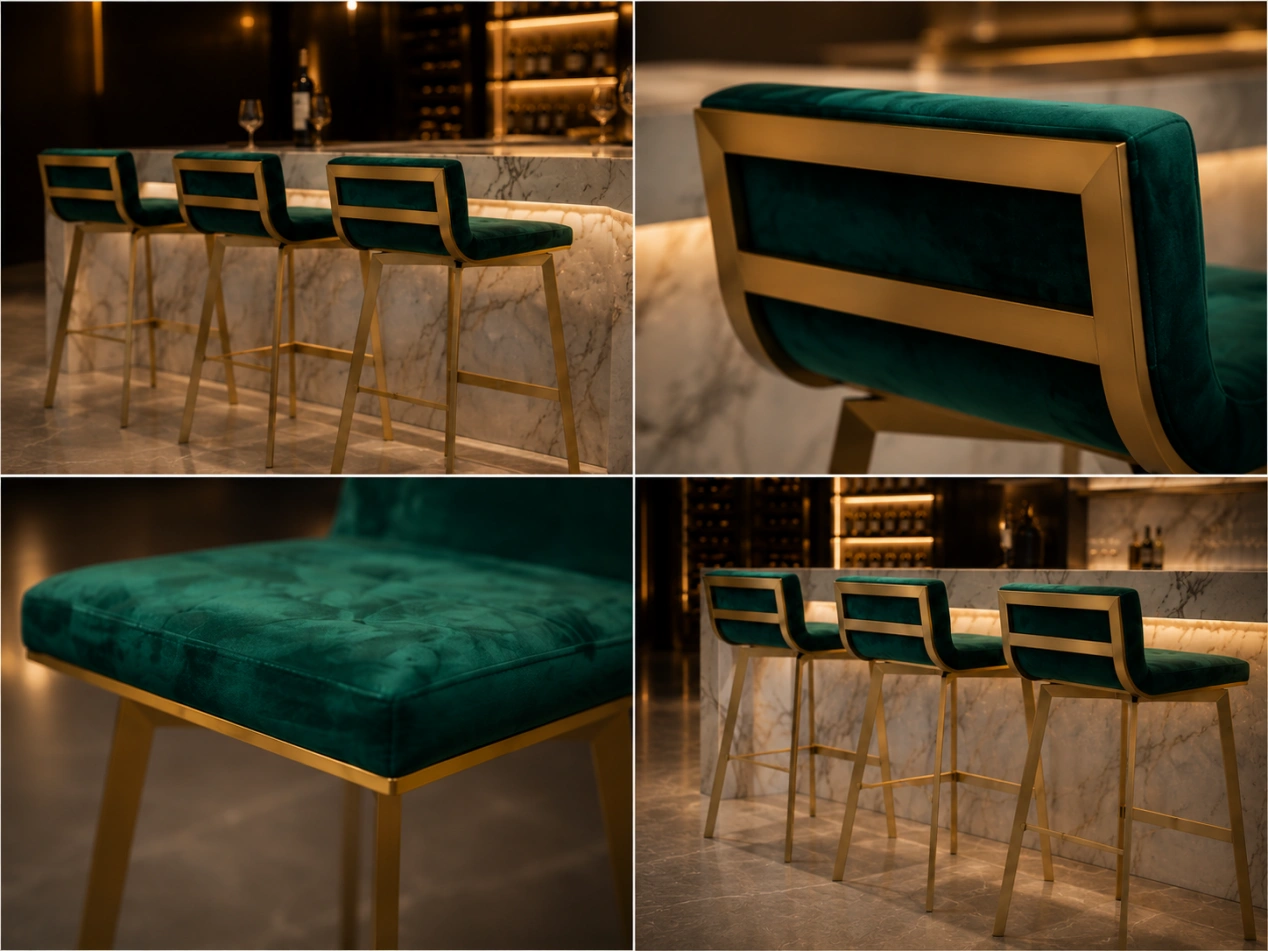
For example, PABS015A can be introduced as a bar stool option for buyers who want a clean commercial seating style without making the whole space feel crowded. The product should be considered together with project size, finish choice, and the buyer’s preferred interior mood.
How Can Material and Craft Decide Long-Term Value?
The most expensive bar stool is not always the one with the highest unit price. Sometimes the real cost comes from repair, return, unstable quality, or early replacement. Material and craft decide whether a stool can survive daily use, especially in restaurants and hospitality spaces.
Metal Frames Need More Than a Nice Finish
For metal furniture, the frame is the backbone. PNA Furniture works with stainless steel and iron furniture, and its production process includes tube cutting, welding, grinding, polishing, painting, and packing. Steel tubes are cut by automatic laser tube cutting equipment for precise angles and dimensions, while CNC cutting supports sheet metal parts and more flexible shapes.
Good welding also matters. Smooth weld seams are not only about beauty. They reduce weak points and make later finishing cleaner. The factory uses fixtures and jigs during iron welding, which helps keep different batches consistent. This is a small production detail, but buyers who place repeat orders know how important it is.
Surface Work Affects Both Look and Lifespan
Surface treatment is often where cheaper furniture starts to show problems. Rough weld marks, uneven polishing, weak coating, and poor anti-rust work may not look serious at first, but they can become complaints after a few months.
According to PNA Furniture’s process, stainless steel polishing can reach a near mirror-like surface, while iron frames go through weld grinding before painting. The painting process includes anti-rust treatment, primer coating, low-temperature baking at about 45 to 50 degrees Celsius for around two hours, manual finish painting, topcoat work, and natural drying. That slower process costs more time, yes, but it gives a more stable finish.
A small note from the factory side: many buyers ask why handmade metal work still matters when machines are common. The answer is simple. Machines help with speed and accuracy, but careful polishing, welding review, finish control, and hand touch still decide the final feel.
What Should Buyers Check Before Placing Bulk Orders?
Bulk furniture sourcing is not only about selecting a nice model. You also need to check whether the supplier can support sampling, changes, packing, delivery, and later service. A stool order may involve dozens, hundreds, or even mixed models for one project.
MOQ and Sampling Can Lower Buying Risk
Large minimum order quantities can block small project buyers, new retailers, and test-market orders. PNA Furniture’s knowledge base highlights flexible cooperation, zero MOQ in some policies, and low MOQ support for custom and export buyers. Its China factory focuses on R&D, development, and high-end customization, while its Vietnam line supports standardized mass production and overseas order delivery.
For practical buying, this means you can test a model, check market response, and then increase order volume. That is safer than being forced into a full-container order before product feedback is clear.
Warranty Should Be Clear Before Shipment
An 18-month quality warranty gives buyers more confidence, especially when the furniture is used in hotels, villas, restaurants, and commercial lounges. PNA Furniture states that manufacturing defects can receive free replacement support, while damage from improper handling is excluded. This kind of warranty detail is useful because it sets expectations before the order leaves the factory.
Before confirming an order, you should ask for:
Product dimensions and finish details
Material and color confirmation
Packing method
Production lead time
Quality inspection standard
Trade term options such as FOB, CIF, or DDP
After-sales contact process
It is not glamorous paperwork, but it saves trouble later.
Can a Vietnam Production Line Reduce Cost and Tariff Pressure?
Tariffs and shipping costs are now part of furniture sourcing decisions. A buyer may like the design and price, but the final landed cost can change after customs duties, freight, storage, and delays. That is why a dual production base can be useful for global orders.
Vietnam Orders Can Support Better Landed Cost Control
PNA Furniture has a China and Vietnam dual-base model. The Dongguan factory focuses on R&D, customized solutions, 3D prototyping, multi-material production, and project-level development. The Vietnam production line, launched for overseas order delivery and standardized mass production, offers cost and tariff advantages.
Because Vietnam is an RCEP member, the Vietnam line can help buyers in North America and Europe reduce trade barrier pressure and save about 20% to 25% in customs duty expenses in suitable cases. Labor cost for key roles in Vietnam is also lower than in eastern coastal areas of China, which helps control production cost when orders fit the Vietnam line.
Flexible Production Is Better Than a One-Route Supply Chain
Some Vietnam factories require full-container minimum orders. PNA Furniture’s Vietnam line is positioned to break that rule, supporting low minimum quantities by model, sometimes starting from dozens of pieces instead of full containers. This is useful for buyers who need mixed models, seasonal launches, or project-based purchasing.
Logistics is another concern. Vietnam ports such as Haiphong and Ho Chi Minh City are close to major shipping routes, which can help shorten shipping time by several days compared with some domestic port routes in China. The exact result still depends on destination, vessel schedule, and order details, but the direction is clear: more production options give you more control.
How Should You Match a Bar Stool to Your Business Space?
A good bar stool should fit the actual business setting. A hotel bar, quick-service café, luxury villa, and kitchen island project do not need the same product. Buyers should match style, traffic level, and cleaning needs before choosing.
For Hotels and Restaurants
Choose a stool with stable structure, easy-care surfaces, and a finish that matches the rest of the interior. In high-traffic spaces, strength matters more than overly delicate details. A design can still look premium, but it should not be hard to clean or easy to scratch.
You can review project references through the case section when checking whether a supplier has experience with commercial furniture. Real project experience matters because factory samples and project delivery are not the same thing.
For Retailers and Wholesalers
Retailers often need products that look fresh but are not too risky. Original design, flexible order size, and repeat-order consistency become important. PNA Furniture develops original furniture designs in-house, supports custom drawings, and provides one-on-one service from inquiry to delivery.
The about page gives more background on the company’s position as a factory-direct furniture manufacturer, which helps buyers judge whether it fits OEM, ODM, or project-based sourcing needs.
For Designers and Project Buyers
Designers usually care about proportion, texture, and customization. They may need color changes, finish adjustments, material matching, or drawings before deposit. PNA Furniture supports concept communication, scheme design, 3D modeling, and production implementation, which can help when a project needs a specific look instead of a standard catalog item.
When details are ready, buyers can use the contact page to discuss product selection, project needs, and shipping terms.
What Makes One Bar Stool a Better Long-Term Purchase?
A long-term bar stool purchase is not decided by one photo, one sample, or one low price. It is decided by the full chain behind the product. Design should fit the space. Comfort should support real use. The frame should be stable. The finish should last. The supplier should answer fast, inspect carefully, and handle after-sales issues clearly.
PNA Furniture’s value comes from several practical points: factory-direct supply, original design, multi-material production, handmade metal craft, CNC and laser cutting support, full-process quality checks, 18-month warranty, and a China-Vietnam production model that can help with customization, delivery, cost, and tariff planning.
For buyers comparing bar stools for commercial use, the best choice is not always the cheapest stool. It is the stool that keeps its appearance, reduces after-sales stress, and fits the business model. That is how one bar stool can balance style, comfort, and long-term commercial use.
FAQ
Q1: Can One Bar Stool Work for Both Home and Commercial Spaces?
A: Yes, but the structure, finish, seat comfort, and cleaning needs should be checked first. Commercial spaces usually need stronger frames and more stable surface treatment.
Q2: What Should You Check Before Buying Bar Stools in Bulk?
A: Check dimensions, material, finish, MOQ, sample policy, lead time, packing, warranty, and trade terms. These details affect the final cost more than the unit price alone.
Q3: Why Is a Low Back Bar Stool Popular in Modern Interiors?
A: A low back gives basic support without blocking the room visually. It works well in cafés, bars, kitchen islands, lounges, and compact hospitality spaces.
Q4: Can Vietnam Production Help Lower Tariff Costs?
A: Yes, suitable orders made through the Vietnam production line may help reduce tariff pressure, especially for buyers in North America and Europe, while also supporting flexible order sizes.
Q5: How Long Should a Commercial Bar Stool Last?
A: Lifespan depends on frame quality, welding, coating, use frequency, and maintenance. A well-made commercial stool with proper surface treatment and quality inspection should perform much longer than a basic low-cost item.


