

Key takeaway: On the ordered sample, separate a rocking foot, a twisting frame and a table that begins to turn over. The floor, hardware and wall-fixing decision belong in the same approval record.
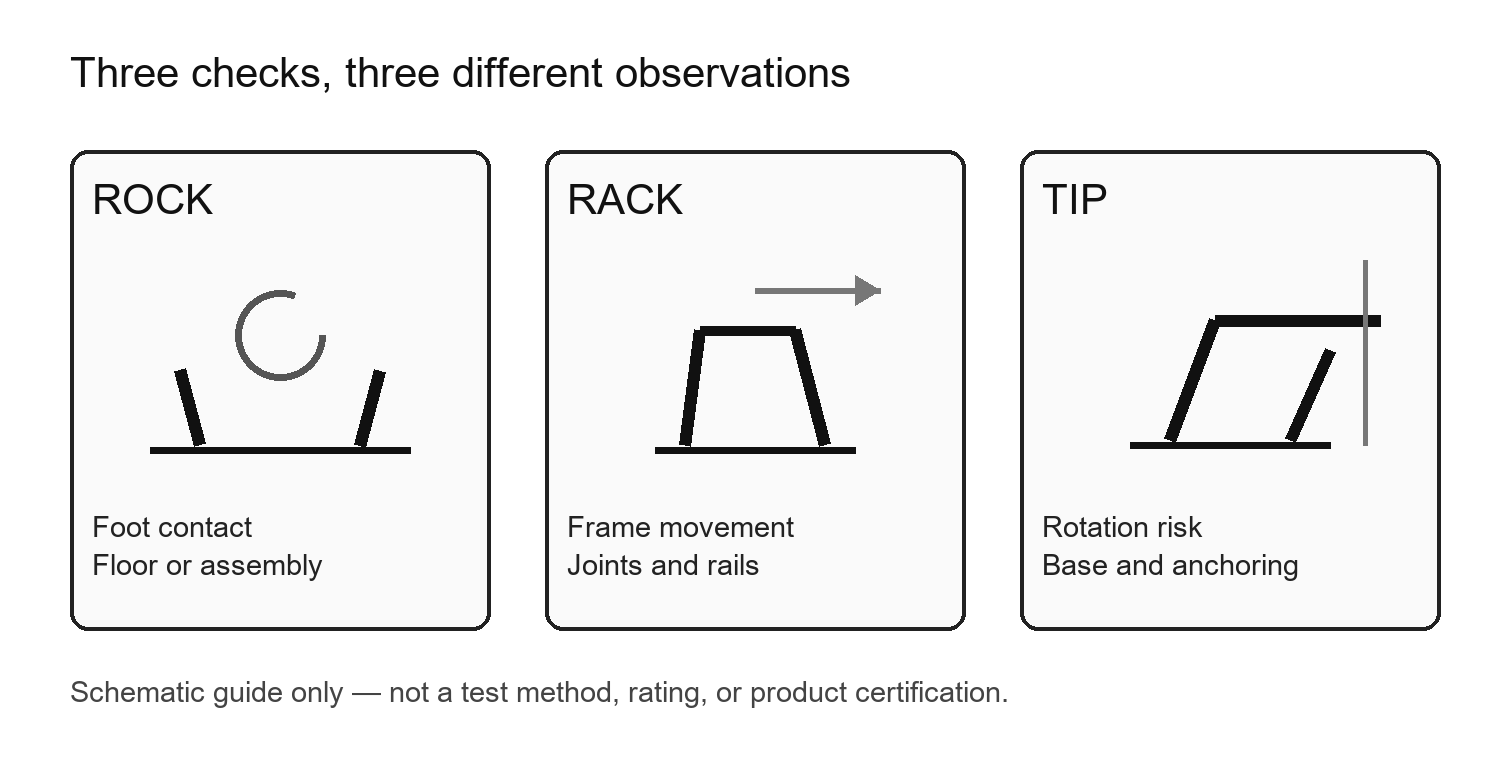
An empty console may look firm in the showroom. At the site, a hand on its front edge or a drawer pulled open can tell a different story. I would write down the movement I actually see: a foot leaving the floor, the rails shifting while the feet stay down, or the base starting to rotate. Each points to a different change, and calling them all ‘unstable’ gives the factory too little to work with.
Start by separating wobble, racking, and tipping
When one corner lifts, I check foot contact, the glide position, the floor and the assembly joint. If all four feet remain on the floor but the top shifts sideways, the frame is moving out of square. Tipping is the whole table rotating around its base edge as a load or push passes beyond the support footprint. These are three different notes on the sample form.
A foot and a rail can both be wrong on the same table. Adjusting the glide may fix the rocking but not the moving rail; it certainly will not fasten the table to a wall. A weight placed on a low shelf is another configuration to review, not a wall bracket.
|
What you observe |
Likely place to investigate |
What to record |
|
One foot lifts or the top rocks |
Floor contact, assembly, or glide setting |
Floor type, foot position, adjustment |
|
The frame shifts sideways while feet stay down |
Joints, rails, or frame geometry |
Pressure direction, joint movement, sample revision |
|
The table starts rotating around its base |
Footprint, load position, and anchoring plan |
Setup, intended use, and stop condition |
Agree acceptance limits for the room and use in this order. The table below helps diagnose movement; it does not supply a universal pass/fail rating.
A narrow console gives a person less distance between the front edge and its support line. That makes overhang worth measuring, though depth alone cannot predict tipping. Top mass, leg location, frame stiffness, floor slope and the way people use the piece also affect it.
Read the base footprint before judging the tabletop
Draw the footprint under the top. I would measure the feet in both directions, then show whether the legs sit at the corners, lean inward or join a frame. Add the top overhang. It is easier to discuss an edge push with the support line marked than to rely on the tabletop dimension alone.
Depth, overhang, and floor contact
I would set the built sample on the floor intended for the project before touching its glides. A level showroom slab can hide a wobble that appears over tile grout, a slope or a rug edge. Write down the glide settings and check that each remains engaged. When the sample moves to another surface, repeat the observations there.
The PACS232A entry from PNA Furniture gives 1,400 × 400 × 800 mm and knock-down construction. It tells me which item to request, not how it performs. The order sample needs its own top, base, leg angle, glides and supplied assembly hardware checked as one configuration.
What a heavy top does not prove
Top weight has two effects to consider. It may lower the combined center of gravity, yet a rotating table also puts more load through its joints. The footprint and top height still matter. Move a display item near an overhanging edge and the loading is different from the empty sample.
On the approval sheet, I want the top material and thickness as well as the way it fastens to the base. Until those are fixed, ‘same style’ does not tell production which configuration the buyer signed off.
Check the assembled sample on the intended floor
On a bulk order I would use the same short handling sequence on more than one sample. Photograph the model tag, underside joints, feet and anchoring parts, then confirm assembly was done under the supplied instructions. An added screw or bracket before the first check would make the sample unlike the production kit.
Assembly and joint checks
Visual inspection along the rails and feel for slop at legs and joints. The lid will remain attached to the frame with minimal force from your hand. If a knock-down connection requires a workshop improvisation, then it belongs on the correction list — not in an approved assembly method. If a knock-down connection requires workshop improvisation, the correction list is not an approved assembly method.
Pushed down very lightly at the center and corners that you can access, then sideways across the entire frame. Write down which part is moving and if it goes back. When it rotates STOP — NEVER use your body weight or a kid to make the point! Lifting only a foot on the carpet warrants note at that floor and an assembly & glide recheck before frame rejection.
The note needs floor type, assembly status, where pressure was applied, the movement and any adjustment. A force-gauge or project test also needs its load, direction, equipment and method. Without them, ‘passed stability testing’ cannot be repeated across suppliers.
Recording movement without inventing a rating
Keep the model and revision, materials, dimensions, floor, hardware, assembly date, checker, photographs and any correction together. A commercial project should identify the applicable local safety requirements. If a contract cites a test standard, verify it covers this furniture and record the setup used.
CPSC Anchor It safety information explains U.S. household tip-over concerns, including homes with children. The linked furniture tip-over guidance is general; it does not certify this console. Consumer Reports’ furniture anchor guide describes hardware choices, but the wall and table still need a compatible fixing selected on site. ASTM International’s standards catalog is a route to published tests, provided the buyer checks the scope before naming one in a contract.
Set the anchoring and installation boundary
The wall is not a fixing merely because the top touches it. Skirting may leave a gap, and a fastener suited to masonry can fail in drywall. I would assign bracket supply, fastener selection, wall verification and installation to named parties in the purchase and site documents.
State the intended use if the unit is to remain freestanding. Where the brief calls for anchoring, put the bracket, location and hardware on the signed drawing and name the installer. Otherwise the fixing is too easy to omit when the table arrives.
The product and the building each have a part in the anti tip plan. The supplier can identify compatible table hardware; the installer must confirm the wall and its fixing.
Compare the proposed console table configurations
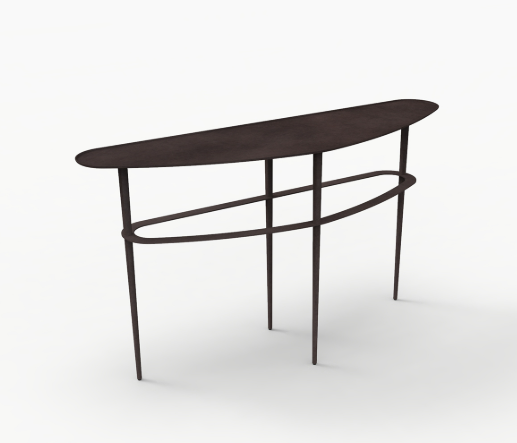
The PACS232A console table is listed by PNA Furniture at 1,400 × 400 × 800 mm with knock-down hardware. Put its base and assembly beside the visual design before approval; a published size does not rate stability on this floor. The console table range gives other silhouettes, and the side table range a lower alternative. Keep each model’s sample record separate.
Model-specific dimensions and materials
I would mark the top size, height, foot spread, leg positions, frame and joints on each candidate drawing. Include the glide type and adjustment. If a buyer requests a custom top, confirm whether the base and overhang are changing instead of assuming the old footprint remains suitable.
A changed finish can come with a different top material or thickness. That takes the order away from the original sample. Mark the revision and give production and receiving staff a new drawing or photograph to compare against.
Changes that require another sample check
Run the sample routine again after a change to the top, base footprint, rails, connectors, assembly process, floor or anchor arrangement. The approval should follow the configuration actually bought.
Consider a signed-off 400 mm deep sample whose top is later made deeper while the base stays put. The changed overhang deserves a new drawing and physical check, because pressure at the edge now acts farther from the feet. Repeat the floor, frame and tip observations on that build. This is an order-control example, not a PNA test result.
Put the acceptance decision in the purchase order
A buyer should be able to identify the exact sample from the purchase order: model, revision, top and frame materials, hardware, assembly instructions and checks. Include the wall-fixing decision and site owner. If the bracket position is hard to describe, mark it on a photograph rather than leave it to an installer’s guess.
List the faults that put a production unit on hold: missing hardware, uncorrectable foot gap, a moving joint or a departure from the signed sample. Quantitative limits need a named method and instrument. For a recognized test, state the document revision, furniture build, push direction, measurement location and threshold. ASTM’s standards catalog can locate possibilities, but the selected scope must match this table and its use.
At goods receipt, put the production piece on the same type of floor and compare it with the approved sample. Rocking points first to contact or assembly; a sideways shift to the frame. If the table begins to rotate, take it out of use and review its build and anchor plan.
Questions buyers ask
Can leveling feet solve a tipping risk?
Only the floor-contact part. Adjustable glides can steady a table on a suitable uneven surface, but they cannot change the width of its support footprint, brace the rails or attach it to a wall. I would record that adjustment without closing the tip-risk item.
Is a wall position enough to secure a console table?
No. Being near a wall is not a mechanical fixing. Where the project requires one, use a bracket compatible with the table and fasteners suited to the inspected wall. CPSC’s Anchor It guidance explains the household concern; the installer still needs to verify this site. Check PACS232A product details and the actual hardware before installation.
For a project query, send PNA Furniture the drawing, room conditions and ordered configuration; the About us page gives background on the company. Include the sample revision. The checklist documents what was observed, while published dimensions alone cannot certify how the unit will behave.


