

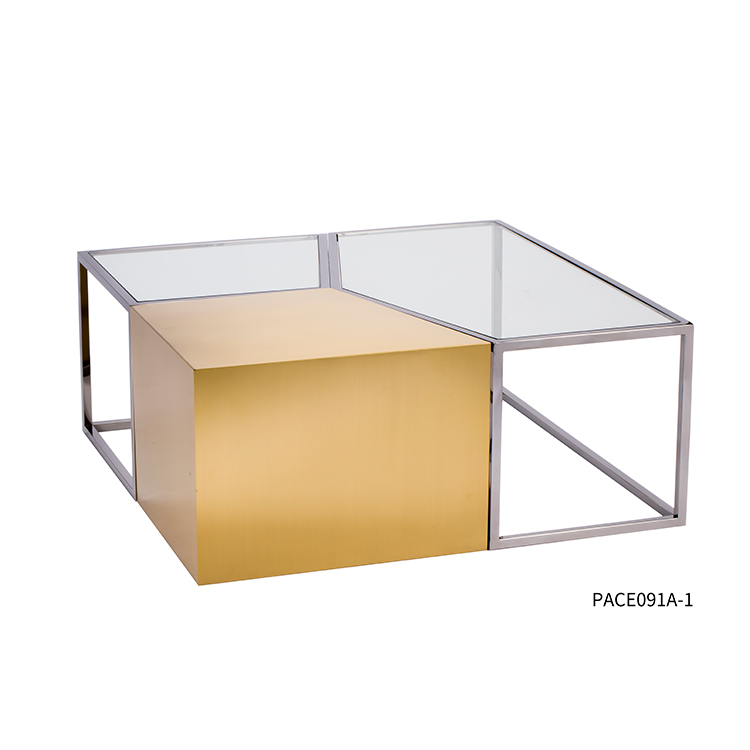
Finish approval ends with a signed decision tied to physical samples. Use separate references for the top and base, include their care instructions, and close any corrections before allowing the finish to be repeated.

Restaurant dining table finish approval connects the chosen appearance to a care routine and an identifiable production sample. The order needs all three before the finish is repeated across a batch.
The record should be usable by receiving staff who never attended the sample meeting. Separate top and base references let them check delivery against the same standard used for production.
Bring the venue’s cleaning routine to the sample review
Send the cleaner’s instructions with the sample request, together with the cloth or pad the restaurant intends to use. Product, dilution and required wet time give the supplier a concrete routine to assess. “Easy to clean” alone leaves that routine undefined.
For U.S. registered disinfectants, the EPA’s guidance on disinfectant use sites and contact time explains why the time a surface remains wet matters. A sample check should reflect the intended routine: an immediate wipe-off cannot stand in for a longer label contact time. The supplier needs to address compatibility with that routine for the proposed table finish.
Buyer and supplier should agree the sample comparison before carrying it out, including the exposure, repetitions and unacceptable changes. An untreated swatch kept beside the treated piece provides a reference once both are dry. Note haze, scratches, color and sheen separately. A visible change warrants investigation before approval; a short check without changes is useful, but does not establish years of resistance.
Keep two care lines on the order
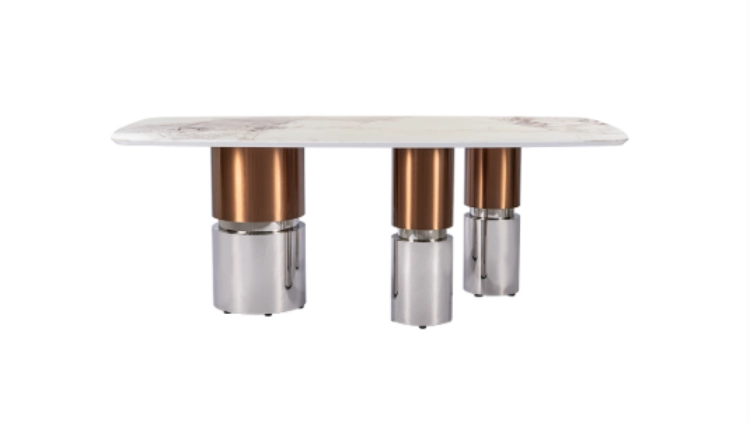
For the PADT210A dining table, the two care entries would refer to quite different specifications:
- Top:Avocado Glossy artificial marble, 30 mm thick.
- Base:201-grade stainless steel, polished gun-black finish.
- Overall table size:2,000 × 1,000 × 750 mm, subject to confirmation of the selected version on the order drawing.
These two surfaces need their own care entries. If staff will use one product on both, the supplier must address its compatibility with the artificial-marble top and polished metal base before the care sheet is issued.
Look at a sample the way a diner and a cleaner will
A dining chair changes the review. Sitting beside the table brings the edge and the metal beneath it into view, including areas an overhead photograph misses. This is where a grinding line may catch the light. For evening service, the room’s intended lighting is the relevant condition to reproduce during review.
The drawing can preserve that seated view for whoever inspects production. Mark the faces examined and note the viewing position. If a mark beneath the pedestal is acceptable, but a scratch on the top is not, record the distinction. “Improve the finish” gives the factory no comparable instruction.
For a patterned top, confirm the construction first: natural stone, artificial marble or another material. Specify whether variation is acceptable or each top needs approval. Individual-piece approval must be agreed before the material is committed.
Compare the visible metal joins
At PNA Furniture, incoming steel tubes are six metres long and go through automatic laser cutting. Sheet-metal components are cut with CNC equipment. More than a thousand jig sets are stored at the factory for holding tubes during welding. From there, the route depends on the metal: grinding prepares iron-frame welds for paint, while the stainless-steel parts are polished.
At the joins, a ridge, heavy coating or abrupt change in reflection needs a marked location and close photograph. Keep this appearance review separate from the checks on dimensions and joint strength.
Find out which finishing route the model uses
PNA’s stainless-steel work passes from welding into polishing, a time-consuming operation that brings the metal toward a near-mirror appearance. On the sample, follow the reflection of a straight light source across a broad face. A change in that reflection gives the reviewer a location to examine more closely.
Iron frames follow a different sequence at the factory. Weld grinding comes first, followed by anti-rust treatment and primer. An overhead conveyor carries the frames through an oven at about 45–50°C for roughly two hours. Painters apply the finish manually afterwards. A final topcoat is added, and the frames are hung to dry again. Across this work, PNA’s painters can produce more than 30 texture and finish effects.
Those manufacturing details help distinguish the routes, but do not establish resistance to the restaurant’s cleaning chemicals. The order needs the treatment selected for the model. If the supplier later proposes a different treatment in the same color, the buyer should revisit both appearance and cleaning compatibility.
For the PADT216A dining table, buyers can choose silver or gold for the polished stainless-steel pedestal beneath the stone-look top. The precise top construction belongs on the current drawing. With the pedestal finish, take the sample to the room’s other metal fittings if possible. Under one light, differences in color and reflection become easier to compare.
What belongs on the finish approval sheet?
Use the following suggested buyer record with the model, drawing revision and date in its header. The top and base need separate sample IDs. Each open item should name its action owner and the evidence needed for closure; the decision itself needs an authorized approver.
|
Review item |
Evidence to record |
Decision required |
|
Top appearance |
Top sample ID, pattern variation, light and viewing position |
Accept the surface or mark the area for correction |
|
Base appearance |
Base sample ID, color, sheen and comparison with other room fittings |
Accept the selected finish or request another sample |
|
Cleaning compatibility |
Cleaner, dilution, exposure and result against untouched reference |
Release for the agreed routine, or hold pending investigation |
|
Visible joins and edges |
Marked locations and close photographs |
Accept the stated condition or request correction |
|
First production unit |
Comparison with retained sample and drawing revision |
Release repeat work only after open issues are closed |
PNA’s showroom retains product samples for three years. The purchase record should identify the retained sample for this order and explain how staff can refer to it later. If corrections produce a replacement, the earlier sample must lose its approved status. Otherwise the factory and buyer could each be comparing against a different version.
The signed decision can be one of the following:
- Release:the authorized buyer accepts the completed checks and allows the order to proceed.
- Correct and resubmit:a named owner must make a stated change and provide the evidence requested for closure.
- Hold:the reviewer still lacks information needed to decide. An unidentified top material, for instance, needs clarification before approval can continue.
For a correction, attach the revised photograph or sample reference when the item closes. This keeps the final signature tied to the version actually accepted.
Inspect the first production table before the rest
The first complete table brings the approved components together. Beside the retained sample, under the agreed lighting, its top, edges, base color, sheen and joins can be compared on the same approval sheet. Photographs of the two together preserve a more useful comparison than pictures taken in separate rooms.
Five quality inspections take place during PNA’s production process. Before shipment, inspectors check overall dimensions and compare the color and finish with the order. They also examine surface cleanliness, obvious scratches, and scars or dents at welded areas. The buyer can request the record for the selected table to connect those general inspection practices with the unit being accepted.
Repairs should come back to the reviewer. A touched-up area or polished patch can differ from the surrounding surface, so closing the item requires another comparison. Where the packing method is new, open the packed sample as well. That last look checks whether the protection has preserved the finish being signed off.
Release an order that names the actual surface
Choose a model from the dinning table collection and request its drawing and finish choices. Include the completed approval sheet with the purchase order, naming who may accept later substitutions.
Send the selected model, cleaner and intended lighting conditions through the project inquiry contact to begin the finish discussion. Keep the agreed references available for the delivery check.


