

Commercial dining tables do not usually break down because of one big accident. Most damage starts with small issues. These include a weak joint, a poor finish, an unstable base, or a material choice that looks fine in a catalog but performs badly under daily use. For restaurants, hotels, cafes, and project buyers, early table failure means replacement cost, guest complaints, downtime, and messy after-sales claims.
PNA Furniture is a factory-direct manufacturer founded in 2010. It focuses on high-end modern furniture for global residential, hotel, and commercial projects. Its strength sits in original design, metal and wood craftsmanship, custom OEM/ODM production, and export service. The company supports buyers with in-house design, flexible orders, quality control, an 18-month warranty, and both China and Vietnam production lines. That mix matters when you need commercial furniture that looks polished, ships smoothly, and holds up after real use, not just showroom display.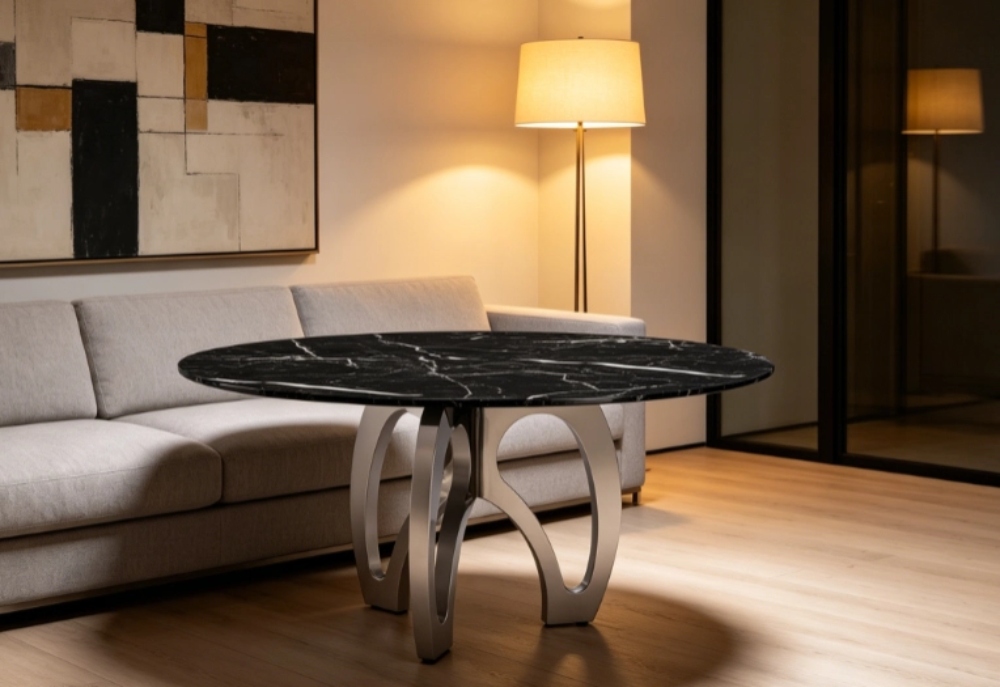
Why Do Commercial Dining Tables Fail Before Their Expected Service Life?
Commercial tables carry a hard life. Plates, cleaning chemicals, wet cups, laptops, elbows, bags, and constant movement all land on the same surface every day. A table may look elegant on day one. But if the structure, finish, and size do not match the dining space, problems start early.
Weak Core Structure Under Daily Pressure
The core structure decides whether a dining table stays steady after months of use. In commercial spaces, a table is pushed, dragged, wiped, leaned on, and sometimes moved several times a day. If the tabletop is too heavy for the base, or the connection points are not well supported, wobbling appears first. Then screws loosen. After that, cracks and noise follow. Buyers should look beyond style for this reason. They need to ask how the frame is made. They also need to check how the base connects to the top. And they should confirm whether the factory checks welding, polishing, surface finish, and size before shipment. PNA Furniture’s knowledge base mentions 100% inspection before shipping and hand-polished metal work. This detail proves useful for dining tables with visible metal bases.
Poor Surface Resistance in High-Traffic Dining Spaces
A dining table surface must deal with stains, scratches, heat marks, and repeated cleaning. A surface that works for a private home may not work in a restaurant. Commercial buyers should ask about scratch resistance, edge protection, and cleaning compatibility. Cheap finishes often look glossy at first. Then they turn dull after repeated wiping. A simple rule helps here. If the table will be cleaned many times a day, the finish must be selected as a working surface, not only as a decorative layer. That sounds basic. But it is where many purchase mistakes happen.
Mismatched Table Design for Commercial Use
Some dining tables fail because the design does not fit the site. A large round table with a narrow base may look dramatic. But it can block chair movement. A sharp edge may look clean. But it chips faster in crowded layouts. A light base may reduce shipping weight. But it may feel unstable in daily service. For hotels, restaurants, and clubs, size, base shape, chair clearance, and aisle flow should be checked together. Good commercial furniture is not only beautiful. It needs to behave well when the room is full.
Material and Structure Risks Behind Early Damage
Material selection is where cost control and long-term value often fight each other. A lower unit price can look attractive, especially for bulk projects. But if the table needs replacement after one season, the real cost becomes much higher.
Tabletop Material Selection
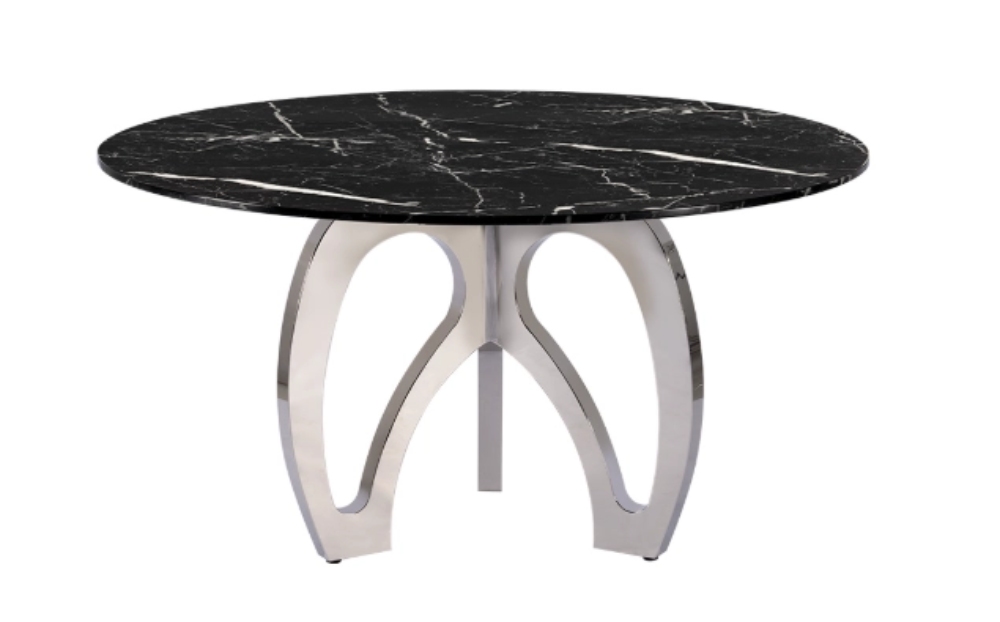
Tabletops should be chosen by use level. Marble-style tops, engineered surfaces, wood finishes, and glass all have different strengths. Dark stone textures can hide small marks better than plain light surfaces. Wood brings warmth but needs better moisture control. Glass feels clean and modern. But edge safety and thickness matter in this case. The Dinning Table PADT231A is a useful example from PNA Furniture’s table line. It features a round black stone-look tabletop with white veining and a polished silver metal base shaped with curved open forms. The round top supports better guest circulation. The sculptural base gives the table a high-end look without using four bulky legs. For upscale dining rooms, private rooms, hotel restaurants, and villa-style projects, this type of table can add visual value while keeping the layout clean.
Base Stability and Weight Balance
A table base should match the tabletop’s weight, diameter, and use environment. If the base is too small, the table may tilt when someone leans on one side. If the base is poorly balanced, staff will keep adjusting it. And guests will notice the issue. This is not a fancy topic. But it remains a very real one for daily operations. Metal bases need careful welding, polishing, and leveling. PNA Furniture’s manufacturing content highlights handmade welding and polishing, experienced workers, and repeated quality checks. These details matter because metal dining bases often show every small flaw under strong restaurant lighting.
Joint Strength and Long-Term Load Support
Joints are easy to overlook because buyers usually see the top first. But joints carry the load. The connection between tabletop and base must resist vibration, movement, and repeated pressure. For custom projects, buyers should ask for drawings, connection details, and packing methods before production. PNA Furniture About Us states that the company works with in-house R&D, engineering, production, and QC teams. This setup helps buyers check structure before mass production. It works especially well when a project needs special sizes, colors, or finish changes.
Finish, Edge, and Hardware Inspection Standards
A table can fail even when the frame is strong. Surface finish, edges, and hardware decide how the table looks after daily service. These details are small on paper. In a dining room, they are the parts people touch most.
Scratch-Resistant and Easy-Clean Surfaces
For commercial dining tables, the surface should be easy to wipe and hard to stain. Buyers should ask whether the finish can handle alcohol-based cleaning, food spills, water rings, and frequent cloth wiping. A smooth surface also helps staff clean faster during table turnover. PNA Furniture’s product knowledge mentions commercial-grade materials and scratch-resistant table surfaces for dining spaces. That fits the real buying concern. It leads to less maintenance, fewer complaints, and a cleaner guest experience overall.
Edge Protection Against Chipping and Moisture
Edges take more abuse than most buyers expect. Chairs hit them. Service carts touch them. Guests place bags against them. If an edge chips, the whole table looks old. For wood, veneer, stone-look, or glass designs, edge treatment should be checked before bulk order. Round tables can reduce corner impact. This is one reason they are common in dining spaces where movement is tight. The PADT231A’s round form helps soften traffic flow and lowers the risk of sharp corner damage.

Hardware Quality for Repeated Commercial Use
Screws, plates, glides, and hidden connectors must be checked before shipment. Low-grade hardware can loosen after repeated use. Adjustable feet are also important when floors are uneven. A slightly uneven floor can make even a good table feel cheap. Buyers should request pre-shipment inspection, product photos or video, and clear packaging details. PNA Furniture’s customer service process includes production updates, inspection before shipment, and flexible shipping terms such as FOB, CIF, and door-to-door service.
Commercial Buying Checklist for Long-Term Use
A good buying decision starts before price negotiation. Table life depends on the match between design, space, use level, and supplier support. The best checklist is short, practical, and easy for a project team to use.
Dining Space Layout and Table Size Planning
Check the number of seats, aisle width, chair size, and service movement before choosing tables. A beautiful table that blocks staff movement will not stay popular for long. For restaurants, round tables often suit private dining and premium zones. Rectangular tables work well for modular layouts and group seating. Both options need careful review based on the actual floor plan.
Maintenance Cost and Replacement Cycle Control
Ask what happens after delivery. Is there an 18-month warranty? Are replacement parts available? Can the supplier respond quickly across time zones? PNA Furniture’s knowledge base states that the company provides an 18-month quality guarantee, free replacement for manufacturing defects, and factory-direct service. That reduces risk for buyers who need long-term supply, not a one-time deal.
Dinning Table PADT231A as a Practical PNA Furniture Recommendation
For buyers who want a dining table with a strong decorative presence, Dinning Table PADT231A is worth adding to a project shortlist. Its dark round tabletop, white veining, polished metal base, and open curved structure suit modern dining spaces that need a luxury tone without heavy visual clutter. It is especially suitable for boutique restaurants, hotel dining rooms, reception dining areas, and high-end residential projects. For bulk orders or custom color requests, PNA Furniture’s OEM/ODM service can help adjust size, finish, and project details before production.
Contact PNA Furniture for Vietnam Production and Europe-America Market Supply
Large commercial projects need more than a nice product. They need stable production, clear communication, and shipping plans that do not create extra trouble. This is where Contact PNA Furniture becomes a practical next step.
Flexible Manufacturing for Commercial Furniture Buyers
PNA Furniture supports ready-made catalog orders and OEM custom projects. The order process includes design discussion, quotation, deposit, production, inspection, balance payment, and shipping. The company also offers zero MOQ flexibility in its knowledge base. This helps startups, small project buyers, and test-market orders move forward without extra barriers.
Vietnam Production Line Advantages for Global Orders
PNA Furniture lists both a China production line and a Vietnam production line on its contact page. For Europe and America buyers, Vietnam production can help reduce tariff pressure for suitable orders. This depends on product category, destination rules, and customs requirements. It also gives buyers another supply option when schedules, duties, or routing become sensitive.
Reliable Supply Support for European and American Projects
PNA Furniture serves buyers across North America, Europe, the Middle East, Australia, and Southeast Asia. Its case section supports the company’s project-focused positioning. Its factory-direct model helps buyers control cost without giving up design and finish quality. For commercial dining tables, the safest choice is not always the cheapest table. It is the table that fits the space, survives cleaning, carries weight properly, and comes from a supplier that answers when help is needed. PNA Furniture fits that sourcing logic well.
FAQ
Q1: Why Do Commercial Dining Tables Usually Fail Early?
A: Commercial dining tables usually fail early because of weak joints, poor surface resistance, unstable bases, chipped edges, or a design that does not match daily restaurant use. PNA Furniture reduces these risks through structure checks, material selection, and pre-shipment inspection.
Q2: Can PNA Furniture Support Custom Dining Table Orders?
A: Yes. PNA Furniture provides OEM/ODM custom furniture service. This includes size, color, material, finish, and design adjustments for commercial projects, hotels, restaurants, retailers, and wholesalers.
Q3: How Can Vietnam Production Help Europe and America Buyers?
A: PNA Furniture’s Vietnam production line can help suitable Europe and America orders reduce tariff pressure. It improves sourcing flexibility and supports smoother supply planning when customs cost and lead time matter.


